No products
To be determined Shipping
0,00 € Total

Blog Categories
Latest Posts
Rolling cigars by hand requires precise skill, a craft that has been passed down for generations in specialized workshops. This practice appeals to both tobacco enthusiasts and those seeking a more authentic experience, rooted in artisanal tradition. It requires patience, the ability to assess the leaves, and a true feel for the craft.
The final quality depends on several factors: leaf preparation, rolling technique, pressing, finishing, and control over the draw. A cigar enthusiast who wants to understand these steps should know that a good result depends not only on technique, but also on the balance between structure, burn, and aroma. A properly maintained cigar humidor then helps preserve this work over time, thanks to a suitable humidifier.
Each traditional method follows a different logic, with advantages depending on the desired production pace. Some prioritize precision, others speed, but all aim to ensure even combustion and a consistent smoking experience. To better understand this craft, it’s important to take the time to examine each step in detail, from preparation to the finishing touches on the cigar.
Traditional handcrafted methods rely on standardized techniques, often associated with Cuban cigar culture. They differ from industrial rolling in the attention paid to each leaf, the internal structure, and the suppleness of the final product. It is this artisanal aspect that accounts for their reputation among cigar enthusiasts.
In this context, it’s important to understand that a rolling method isn’t just a way of rolling—it directly influences the draw, the density of the smoke, and the evenness of the burn. Depending on the method chosen, the result can be airier, tighter, or more consistent. The choice therefore depends on the smoker’s preferences, but also on the desired style of the cigar.
The “entubado” method involves rolling each leaf of the wrapper separately into a small tube before assembly. This technique is demanding, as it requires precise movements and a good command of the slightly moistened tobacco. It is valued for promoting freer airflow through the cigar, resulting in a better draw.
The accordion method, which is faster, folds the sheets in a zigzag pattern rather than rolling them individually. It makes production easier while maintaining a good balance between combustion and draft resistance. Finally, stacking in bundles remains the simplest method: the sheets are placed on top of one another and then folded like a book.
These three approaches show that a hand-rolled cigar can be shaped in very different ways. The best choice depends on your standards, the time you have available, and the desired result. In traditional workshops, a method tailored to the product’s style is often preferred over a one-size-fits-all solution.
Before rolling, preparing the leaves is a crucial step. The tobacco must be sorted according to its role, as each leaf contributes differently to the strength, aroma, and burn. Proper preparation also makes the process easier, preventing unnecessary tears and ensuring consistency.
The cape, sub-cape, and tripe leaves are not processed in the same way. The central rib must be removed or softened when necessary, and the pieces should then be arranged to maximize efficiency. This preparation requires care, but it simplifies the rolling process and helps maintain a consistent shape.
The leaves should be lightly moistened to make them pliable and prevent them from breaking. A properly adjusted humidifier is useful for maintaining this level of pliability without over-moistening the tobacco. In a cigar humidor, this stability makes the work easier and also protects the quality of the finished product.
Cigars are generally made up of several layers: the filler provides the internal structure, the binder holds everything together, and the wrapper gives the cigar its outer appearance. This arrangement helps the roller maintain better control. An experienced roller also knows how to recognize the right moment to place each leaf in order to achieve a harmonious blend.
Properly prepared tobacco results in a cleaner roll and a more even burn. It also helps preserve the flavor, since a leaf that is too dry or too moist alters the smoking experience. For cigar enthusiasts, this step often explains why some cigars seem more successful than others.
A cigar’s filler typically consists of three types of leaves, each serving a specific purpose. The ligero provides strength and depth, the seco enhances the aromas, and the volado facilitates lighting and combustion. This combination helps balance strength, aroma, and draw.
These categories aren’t just theoretical—they directly influence the mouthfeel. A well-thought-out blend can result in a Cuban cigar that is richer, more consistent, and more enjoyable to smoke. The way the leaves are arranged inside the cigar matters just as much as their individual quality.
Getting the right balance of these leaves requires an understanding of how the cigar will behave after rolling. A blend that’s too tight can hinder the draw, while one that’s too loose may burn too quickly. Finding that balance is therefore central to the art of cigar-making.
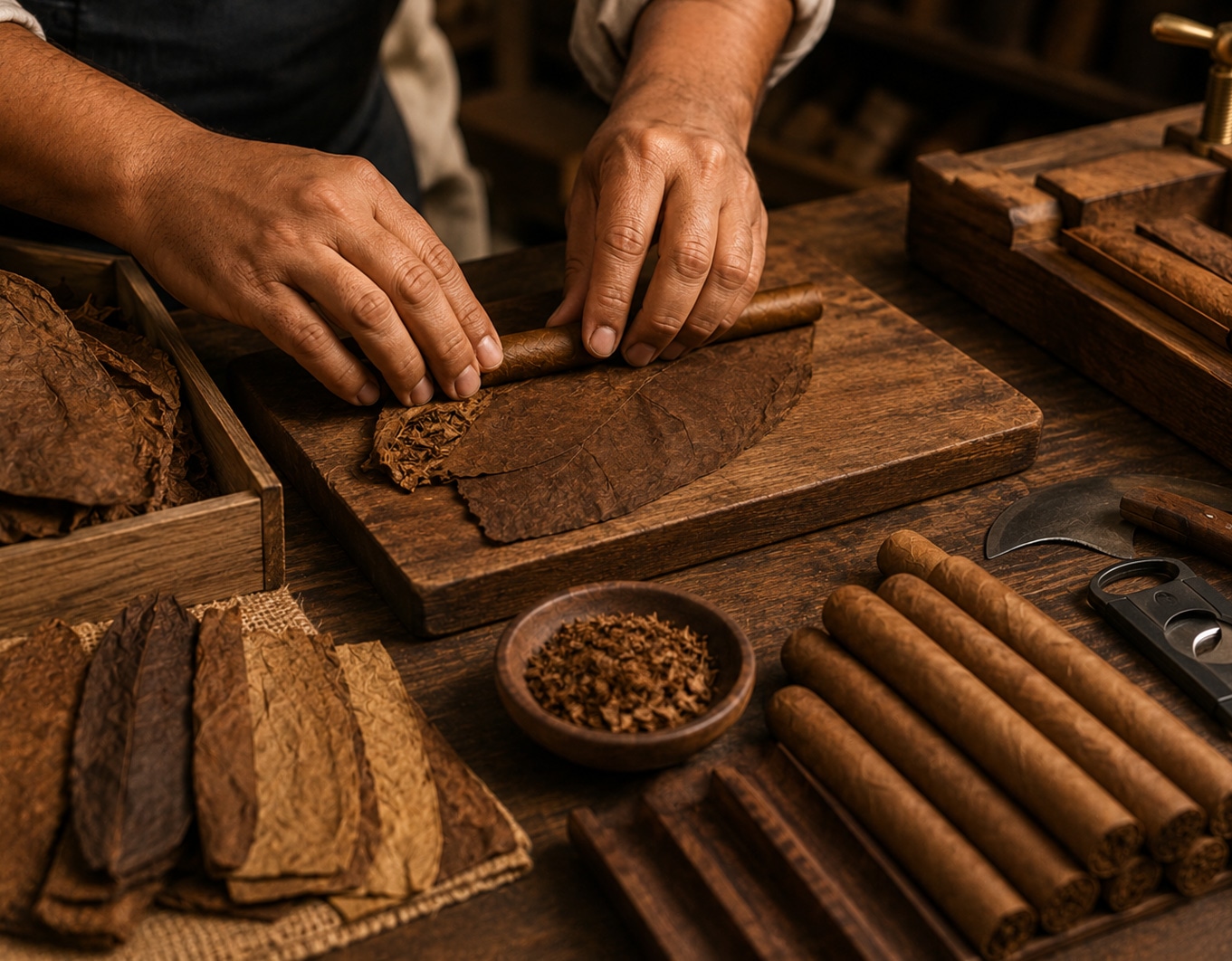
Once the doll has been shaped, it is usually placed in a mold to achieve a uniform shape. This pressing step stabilizes the structure and ensures consistent dimensions. It is particularly useful when you want to maintain a clean, repeatable appearance.
The mold also helps correct minor irregularities that occur during rolling. Depending on the size, the cigar is left under pressure for a certain amount of time to take on its final shape. This ensures a cleaner finish without excessively crushing the filler.
When it comes to special shapes, this phase becomes even more important. A more intricate or complex shape requires extra attention to clamping. The mold then contributes to the overall consistency of the work, without replacing the roller’s skill.
The finishing process begins once the wrapper is in place and the excess must be neatly trimmed. Next, the cap is formed, which protects the head of the cigar and holds the whole thing together. This final step gives the product its final appearance and shape.
Tools such as the chaveta or the guillotine are used to achieve a clean cut. The roller must work with precision to avoid damaging the wrapper. A well-executed finish also affects the smoking experience, as a poorly sealed cap can interfere with the draw.
This final stage requires precision and a clean, precise touch. It’s what sets a simple assembly apart from true craftsmanship. For a cigar enthusiast, this is often where you can tell how much care went into the cigar.
The draw depends on the airflow inside the cigar. If the structure is too tight, the smoke becomes difficult to draw; if it is too loose, the burn can become unstable. The quality of the roll therefore directly influences the smoking experience.
A good method generally results in slower, more even combustion. This helps the flavors develop gradually, without overheating. In practice, the right balance between density and aeration often makes all the difference.
This explains why hand-rolled cigars remain so sought after. Mastery of airflow, tobacco, and shape yields a more nuanced result. It also explains the enduring interest in Cuban traditions.
To roll properly, certain tools come in handy: a rolling board, a suitable knife, a spray bottle, food-grade glue, and a mold. A roller can use these items to improve precision and maintain a steady pace. The Lieberman method, which is more mechanical, is also used to help with grouping, but it is sometimes considered less artisanal.
Special shapes require a hybrid technique, particularly for torpedoes and perfectos. The head must be shaped carefully to prevent clogging. In this case, precision is just as important as experience, because even a small mistake can affect the final draw.
For a cigar enthusiast, understanding these variations provides a better appreciation of the diversity of cigar formats. It’s not just about rolling; it’s about choosing a method that suits the shape, the tobacco, and the desired result. This broader perspective helps one better appreciate the roller’s craft.
Rolling cigars by hand, then, means mastering a series of steps in which every detail counts. From preparing the leaves to the finishing touches—including choosing the rolling method and pressing—every step contributes to the cigar’s overall balance. With a little practice, you’ll gain a better understanding of what sets a good cigar apart from one that’s merely adequate, and learn how to best store it in a cigar humidor.
 en
en 


